



Warm wheats
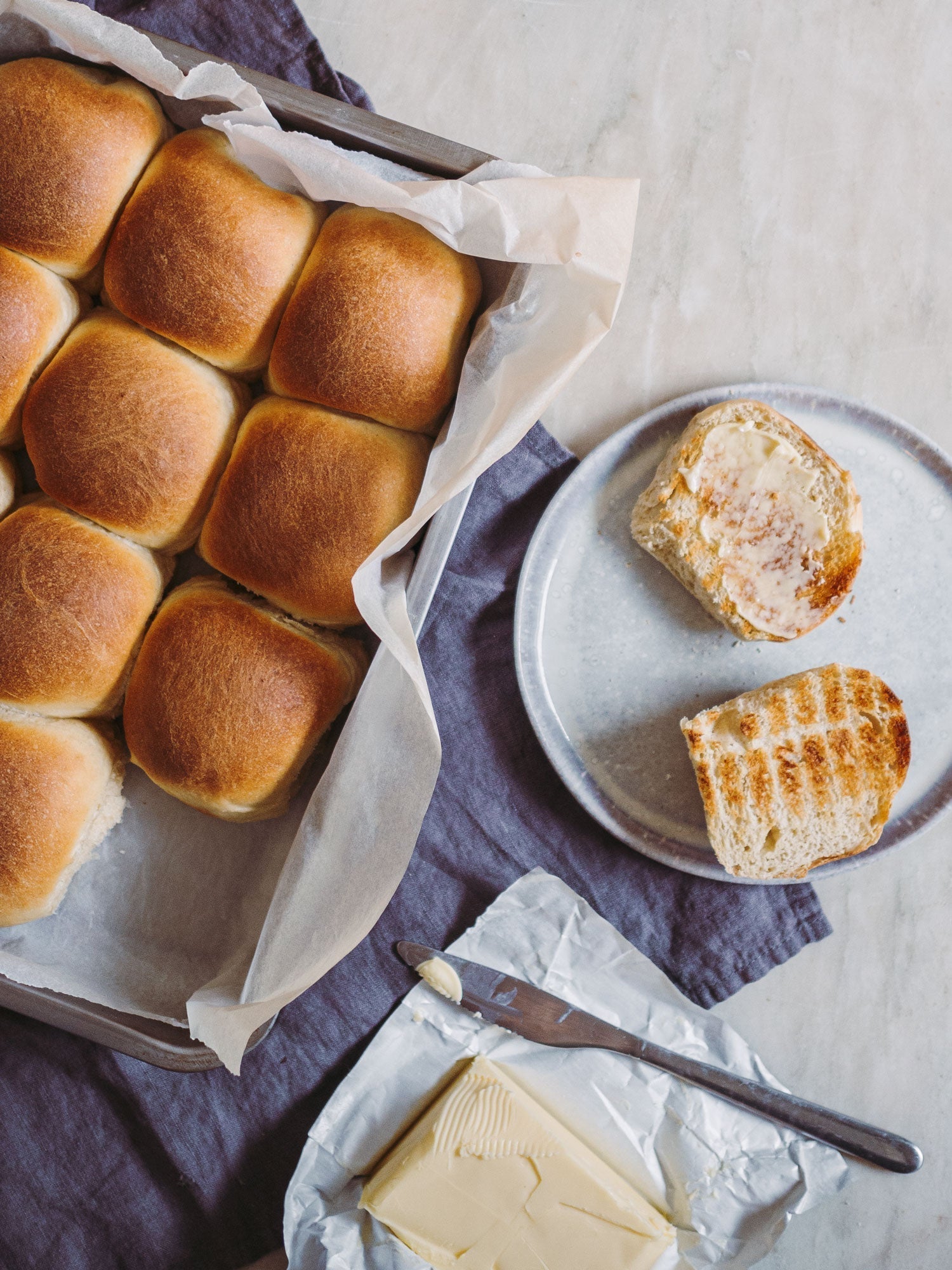


Wheat sprouts with cardamom
Some people associate warm wheat with dry, boring, light buns with no flavor. But they really don't have to be like that - at least not when they are freshly baked! This recipe for wheat is a soft, sweet, airy and dangerously good bun. The wheat is baked as "buds", where they rise and bake together in a dish. That way they grow together, so you get the nice square shape with soft edges. This gives an extra airy and soft bun that tastes fantastic both freshly baked or the next day crispy and toasted. Here, wheat buds are flavored with cardamom, which really gives a wonderful flavor. The recipe uses a full 2 tsp. ground cardamom, but you can easily make do with just one if you like.
TIP: Also try the recipe at soft chocolate buns or Christmas buns

When do you eat hot wheat?
Eating hot wheat is a custom that dates back to the 1800s. It originated because everyone - even the bakers - had to have a day off on Great Prayer Day. Therefore, they baked wheat that people could eat the following days. At that time, light wheat bread was a luxury food, perfect to be eaten on holidays and public holidays. The buns were therefore chalky white rusks, made so that they could be toasted and thus remain fresh. This way, you could eat delicious bread, even though the bakers had a day off. There is some disagreement about when you should eat hot wheat today. Some eat it the day before and others on Great Prayer Day itself. If you choose to eat the hot wheat the evening before Great Prayer Day, you also have leftovers for the morning, where you can toast it and enjoy it warm with a good layer of butter. 

Tips for the best hot wheats
This recipe came about after experimenting with what is the absolute best recipe for hot wheat. In general, there are
- Remember that the dough should not be too dry. You should definitely not add too much flour. The dough can be a little sticky, as it will be easier to shape after rising.
- Knead the dough really well. You want a strong gluten network in your dough so the wheat will rise nicely and become fluffy.
- If you won't be enjoying the buns within a few days, they taste best if you store them in the freezer. Briefly hold the buns under cold tap water to moisten the surface before warming them in the oven. This will give you (almost) freshly baked buns.
TIP: Also try this recipe: gluten-free healthy banana muffins with chocolate

Tips for cold-risen warm wheats
Do you want to make cold-leavened warm wheats, you need to make the recipe with cold milk and use just 10g of yeast. Let the buns rise for an hour before rolling them out and placing them in the dish. You can then cover the dish with cling film (so that the surface does not dry out) and place the dish in the fridge overnight. The next day, take the dish out when you turn on the oven. When the oven is hot, bake the buns.
Warm whole wheat
If you want to make hot whole wheat For example, you can replace 150 g of wheat flour with 100 g of wholemeal flour. You will therefore need 50 g less flour in the recipe, as wholemeal absorbs more liquid.
Wheat with sourdough
If you want to bake warm wheat with sourdough you can easily add 2-4 tbsp. sourdough to the dough. Since you are using yeast as a leavening agent, you can just take your sourdough directly from the refrigerator without it being active. However, it will still contribute good flavor and increase the shelf life of the buns.